
qyysolar@163.com
0086-15601620238
Solar Streetlight Technology Principles and Advantages
Solar Streetlight Working Principle Analysis
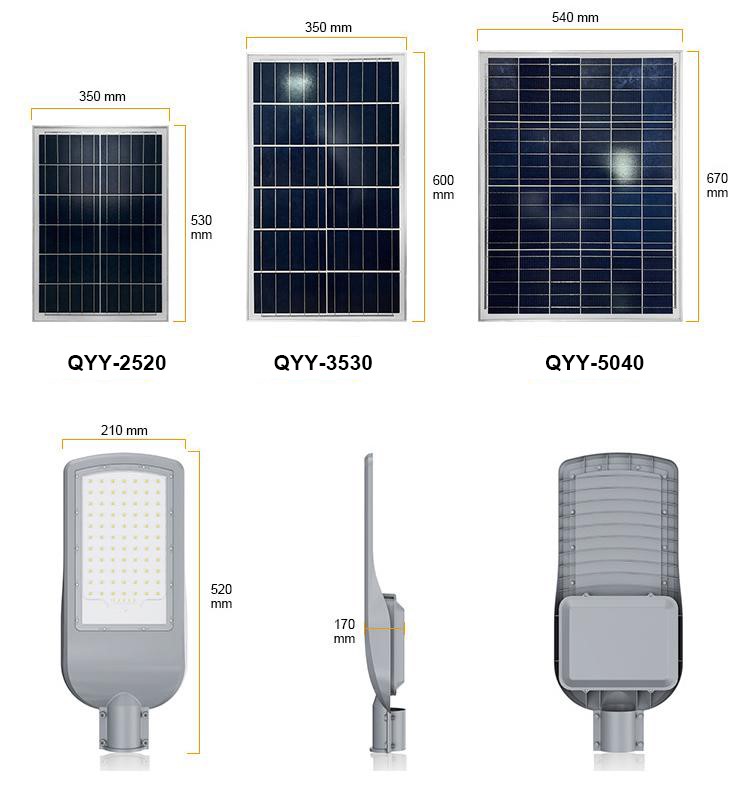
Solar streetlights, as a new energy lighting device, work based on solar photovoltaic power generation technology. During the day, solar cell modules convert solar radiation energy into electrical energy, which is then stored in batteries via a controller. At night, the controller automatically controls the batteries to supply power to the LED light source, achieving automatic lighting. This power supply system completely eliminates dependence on the traditional power grid.
Advantages Analysis
Compared to traditional streetlights, solar streetlights have significant technical and economic advantages:
• Easy Installation: No need for complex cable laying and power distribution facilities, significantly reducing construction costs and time.
• Economical Operation: Zero electricity costs, only need for regular maintenance, resulting in extremely low operating costs.
• Environmentally Friendly and Sustainable: Utilizes clean energy, with no pollution emissions, conforming to the concept of green development.
• Power Supply Stability: Unaffected by power grid failures, ensuring lighting stability.
Key Technical Parameters Selection for Solar Streetlights
Light Source Technology Selection
LED light sources have become the mainstream choice for solar streetlights. When selecting LEDs, the following parameters should be given special attention:
• Luminous efficacy: High-quality LED chips should achieve a luminous efficacy of 100-150 lm/W or higher.
• Luminous decay characteristics: Annual luminous decay should be controlled within 3% to ensure long-term lighting performance.
• Color temperature selection: 4000K-5000K is recommended for road lighting, balancing visual comfort and penetration.
• Color rendering index: Ra value should be no less than 70 to ensure accurate color reproduction at night.
Battery System Configuration
The battery is a key component of solar streetlights, directly affecting system reliability:
• Battery type: Lithium iron phosphate batteries are recommended due to their high safety and long cycle life (over 2000 cycles).
• Capacity configuration: Should be scientifically calculated based on load power and the number of consecutive cloudy/rainy days to ensure stable system operation.
• Charge/Discharge Characteristics: Select an intelligent battery management system with overcharge and over-discharge protection.
Intelligent Control System
An advanced control system ensures efficient operation of solar streetlights:
• Light Control Function: Automatically turns on at dusk and off at dawn, achieving fully automatic operation.
• Time Control Settings: Allows setting brightness adjustments for different time periods, optimizing energy utilization.
• Intelligent Sensing: Microwave sensing technology enhances brightness when pedestrians and vehicles pass by and reduces power when no one is present.
Application Scenarios and Selection Guide
Urban Road Lighting
Urban main roads and secondary roads have high requirements for lighting uniformity and brightness:
• Power Selection: 60W-100W recommended for main roads, 30W-60W for secondary roads.
• Installation Height: 8-12 meters to ensure illumination range and anti-glare effect.
• Light Distribution Design: Batwing light distribution pattern selected to improve the uniformity of road lighting.
Park and Residential Lighting
Residential areas, industrial parks, and other locations prioritizing safety and economy:
• Power Configuration: 20W-40W to meet basic lighting needs
• Installation Spacing: 25-35 meters to balance lighting effect and cost
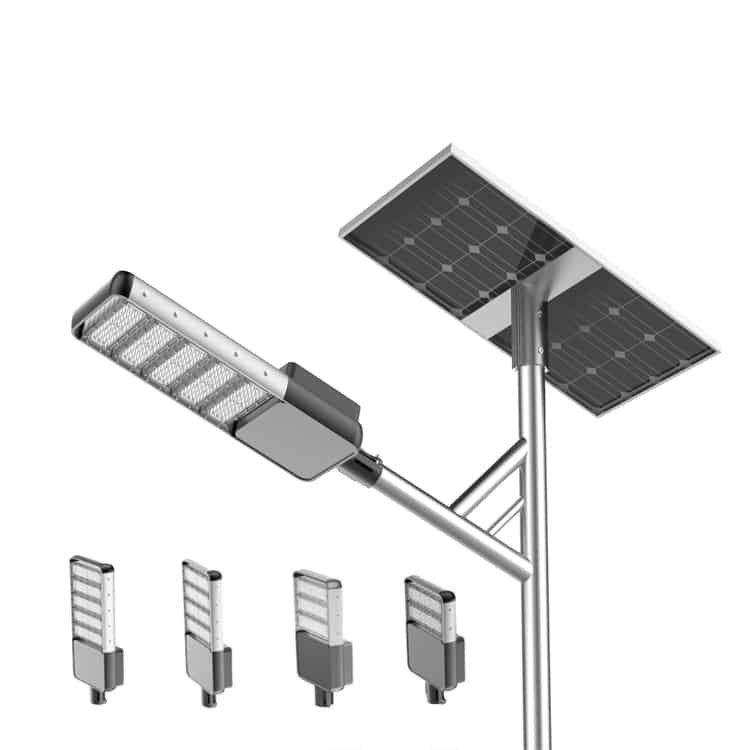
• Style Selection: Courtyard light styles available, balancing functionality and aesthetics.
Special Environment Applications
For special environments such as coastal areas and high-altitude cold regions, special considerations are required:
• Corrosion Resistance: Select light poles and brackets with hot-dip galvanized anti-corrosion treatment.
• Wind Resistance: For coastal areas, products with a wind resistance rating of level 12 or higher should be selected.
• Temperature Adaptability: Ensure that the battery and controller can operate normally within a temperature range of -30℃ to +70℃.
Product Quality Assessment and Supplier Selection
Technical Strength Considerations
When selecting a solar street light supplier, technical strength is the primary consideration. Equipped with professional production equipment such as large bending machines and CNC plasma cutting machines, possessing complete product design, production, and installation service capabilities.
Product Differentiation Advantages
Quality solar street light products should possess the following characteristics:
• Easy Installation: Utilizing an aviation-grade male-female plug-in design, eliminating the need for on-site wiring, reducing installation costs and the probability of incorrect wiring.
• Ultra-Long Battery Life: Achieving 12 hours of continuous lighting, 1 hour of morning illumination, and uninterrupted lighting 365 days a year.
• Intelligent Control System: Integrating microwave-sensored moving object detection, enhancing system stability.
• Long Lifespan Design: Employing lithium iron phosphate batteries with up to 2000 cycle cycles.
Service Guarantee System
A comprehensive service system is crucial for the long-term stable operation of the product:
• Warranty Period: The entire lamp should have a warranty of no less than 5 years, and the components should have a 10-year warranty.
• After-Sales Service: Possessing a comprehensive regional service network for rapid response to maintenance needs.
• Technical Support: Provides professional installation guidance and operation and maintenance training.
Economic Benefits and Return on Investment Analysis
Initial Investment Comparison
Although the initial investment for solar streetlights is higher than that for traditional streetlights, considering the hidden costs such as cable laying and power distribution facilities, the actual investment difference is not significant.
Operating Cost Advantages
The operating cost advantages of solar streetlights are mainly reflected in:
Contact: Ms. Aimy
Phone: 0086-15601620238
E-mail: qyysolar@163.com
Whatsapp:008615601620238
Add: Wuyi Avenue, Furong District, Changsha City, Hunan Province
We chat
